Last Updated on 29/04/2026 by Eran Feit
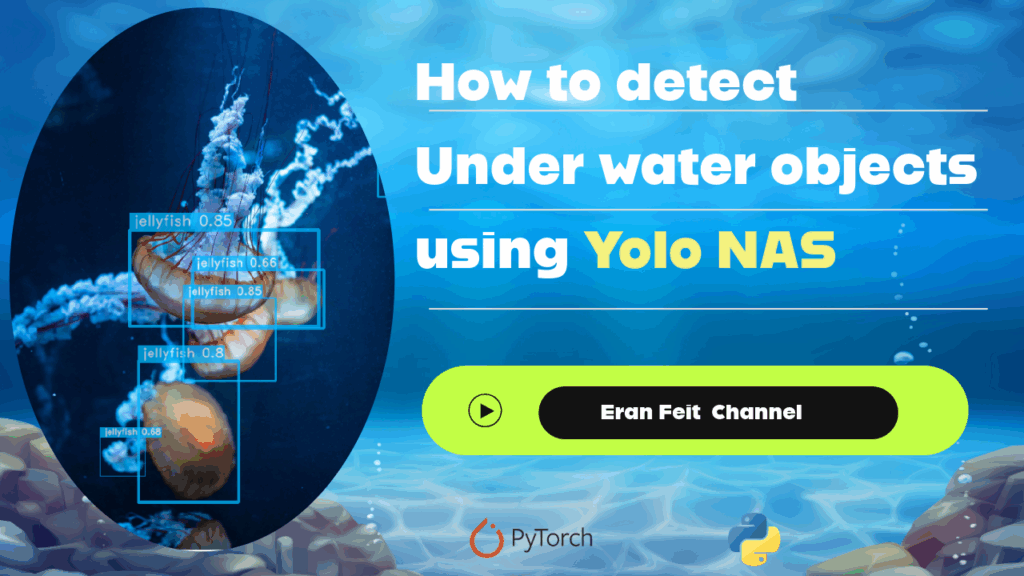
Train YOLO-NAS on custom dataset in Python to achieve state-of-the-art object detection performance without the complexity of manual architecture design. While pre-trained models offer a great starting point, the real power of Neural Architecture Search (NAS) is unlocked when you apply it to specialized data, such as the underwater complexities of the Aquarium dataset. In this guide, we will solve the common ‘thin content’ problem by deep-diving into the SuperGradients training pipeline. You will learn how to initialize the AutoNAC-optimized backbone, configure specialized data loaders, and fine-tune hyperparameters to transform raw aquatic imagery into a production-ready vision system.
In an aquarium or ocean setting, images often suffer from blur, color shifts, reflections, and particles floating in the water. A generic model might miss small targets, confuse background textures with real objects, or underperform when the lighting changes. Training YOLO-NAS on a custom dataset lets you feed it exactly the kinds of underwater scenes and annotations it will see in production, so it can learn to handle these challenges and deliver more reliable detections in real-world videos or still images.
There is also a practical side to this process. By preparing your images in YOLO format, organizing them into train, validation, and test splits, and then running a full training pipeline, you’re building a repeatable workflow. Once you’ve tuned this pipeline on one aquarium dataset, you can easily swap in other underwater collections or even expand to related tasks like detecting coral health, marine debris, or different fish species, all using the same core approach.
Finally, training YOLO-NAS on your own data gives you control over metrics and model behavior. You can track mAP, tune thresholds, monitor how well the detector performs on small jellyfish versus large sharks, and decide when the model is “good enough” to deploy. This is crucial for real projects where missed detections or false alarms can be costly, whether the goal is scientific monitoring, educational exhibits, or automated video analytics in aquariums.
Why Train YOLO-NAS for Custom Object Detection? The Aquarium dataset is a perfect benchmark for testing YOLO-NAS. Unlike standard COCO objects, underwater detection requires the model to handle ‘occlusion’ and ‘fluid distortion.’ By fine-tuning the NAS (Neural Architecture Search) layers, we can maintain real-time speeds without sacrificing the accuracy needed for scientific observation.
When you train YOLO-NAS on a custom dataset of aquarium images, you’re combining three key ingredients: a strong modern detector, a well-structured dataset, and a clear real-world goal. The detector provides the architecture and learning capacity, the dataset provides the visual experience, and your goal shapes how you evaluate success. In this case, the goal might be to accurately detect fish, jellyfish, penguins, puffins, sharks, starfish, and stingrays in crowded or murky underwater scenes.
At a high level, the workflow starts with data. You collect or download underwater images, label each object with bounding boxes and class names, and store everything in the YOLO format expected by the training code. Organizing images into train, validation, and test folders ensures that YOLO-NAS sees enough variety during learning while still leaving aside images that can objectively measure generalization at the end. This structure is crucial for understanding whether the model is truly learning underwater patterns or just memorizing a few examples.
Next comes the model and training loop. YOLO-NAS uses a backbone, neck, and detection head to extract features from your images, fuse multi-scale information, and produce bounding boxes and class scores. During training, loss functions and metrics guide the model towards better performance, while optimizers like Adam adjust weights based on gradients. Over multiple epochs, the model gradually improves at locating fish and other marine animals, reducing localization errors, and better separating similar shapes and textures that are common in underwater environments.
Once you have a trained model, you move into evaluation and prediction. Evaluation on the test split gives you metrics such as mAP@0.50, which summarize how often the model correctly detects and classifies underwater objects at different IoU thresholds. Prediction on individual images or entire folders of aquarium photos lets you visualize bounding boxes and check whether detections match what a human would label. This stage is where you confirm that the model is robust to variations in lighting, camera angle, and water clarity.
Ultimately, bringing YOLO-NAS together with custom aquarium data turns abstract deep learning code into a practical solution. You end up with a detector that not only understands generic objects, but is also specialized for underwater scenes. That specialization can support research, interactive displays, automated monitoring systems, or educational content that highlights marine life, all powered by a model trained on your own curated dataset.
🚀 Recommended for You: Ready to take your object detection skills to the next level? Learn how to handle live data with our latest guide: YouTube Stream Frame Extraction and Real-Time YOLOv8 Detection .
Eliminate stream lag with advanced buffer management. Connect YOLOv8 directly to any YouTube URL. Optimized for low-latency real-time inference. If you want a complete YOLOv8 YouTube object detection workflow (auto-labeling, training, and live inference), follow this step-by-step guide: https://eranfeit.net/how-to-use-yolov8-for-object-detection-on-youtube-videos/
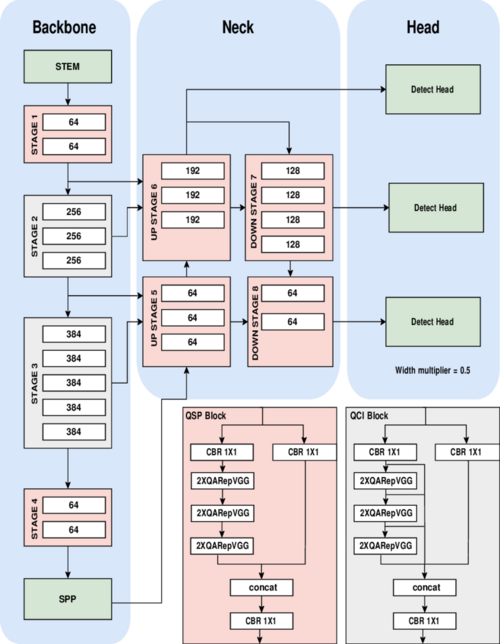
YOLO NAS Architecture YOLO-NAS Architecture: Superior Performance for Computer Vision YOLO-NAS is built to balance two things that are usually hard to get together: top-tier accuracy and real-time speed . Instead of relying on a manually designed network, its structure is discovered with Neural Architecture Search (NAS), which automatically tests and refines different designs. On top of that, YOLO-NAS uses ideas like attention, quantization-aware blocks, and re-parameterization at inference time, so the final model can run fast on real hardware without losing much accuracy.
At a high level, the network is split into three main parts: backbone, neck, and head . The backbone is the feature extractor. It stacks convolutional layers and custom blocks that have been tuned to capture everything from simple edges and textures to complex shapes, parts, and object patterns. When you train yolo nas on custom dataset, this backbone is what learns the visual vocabulary of your domain, whether that’s everyday street scenes, medical scans, or underwater aquarium images.
The neck sits between the backbone and the detection head. Its job is to combine features from different depths of the network, creating a strong multi-scale representation. YOLO-NAS uses an FPN-style neck with cross-stage connections and adaptive feature fusion, so information from shallow and deep layers can interact. This helps the model handle tiny objects, medium-sized objects, and large objects in the same frame, which is crucial for scenarios like underwater detection where small jellyfish and large sharks might appear together in one image.
The head is the part that turns these rich features into actual detections: bounding boxes and class probabilities. YOLO-NAS uses a multi-scale, anchor-free detection head. Instead of depending on a fixed grid of anchor boxes, it learns directly where and how to place boxes around objects. Lightweight channel attention helps the head focus on the most informative features, improving precision without adding heavy computation. During deployment, re-parameterization and quantization-friendly building blocks allow the trained model to be converted into an efficient INT8 version, keeping latency low even on edge devices.
Because of this design, YOLO-NAS is a strong fit for production-grade object detection . In surveillance and security, it can run on smart cameras to detect people, vehicles, or unusual events in real time. In autonomous driving and robotics, its low-latency predictions help detect pedestrians, cyclists, and obstacles so decisions like braking or lane changes can be made quickly. The same architecture can be fine-tuned for aquarium or ocean datasets , learning to recognize fish, jellyfish, and other sea life under poor visibility and challenging lighting.
Beyond classic vision tasks, YOLO-NAS also adapts well to specialized domains like medical imaging and retail. In healthcare, it can act as a second reader to highlight suspicious regions in X-rays or CT scans. In retail, it can track products on shelves, monitor stock levels, or analyze how customers move through a store. In all these cases, you typically start from a pretrained YOLO-NAS model and fine-tune it on your own labeled images , using transfer learning to get strong results from relatively small datasets. That combination of NAS-optimized architecture, deployment-friendly design, and flexible training makes YOLO-NAS a reliable foundation for many modern object detection solutions.
Yolo Nas custom dataset What This YOLO-NAS Aquarium Tutorial Will Help You Build In this tutorial, the focus is practical: we’re going to train yolo nas on custom dataset of aquarium images and end up with a working object detection model you can actually run on your own machine. The code walks you through the full lifecycle—setting up the environment, downloading the dataset, training the model, and finally using it to detect marine animals in new images. By the end, you don’t just understand YOLO-NAS in theory; you have a concrete Python project that proves everything works end-to-end.
The first part of the code is all about creating a clean working environment. You’ll set up a dedicated Conda environment with the right Python version, install PyTorch with CUDA support, and then add the super_gradients library that provides the YOLO-NAS implementation. This makes sure that training can use your GPU efficiently and that all dependencies are isolated from your other projects, which is critical for a smooth deep learning workflow.
Next, the code turns to the dataset. You’ll download an aquarium object detection dataset in YOLO format and organize it into train, valid, and test folders with separate images and labels directories. The script defines a dataset_params dictionary that tells YOLO-NAS where each split is located and what classes exist in the dataset: fish, jellyfish, penguin, puffin, shark, starfish, and stingray. This configuration is then passed into ready-made dataloader functions so the model can read images and labels automatically during training and evaluation.
The core training logic revolves around the Trainer object from SuperGradients and a YOLO-NAS-S model configured for the number of classes in your aquarium dataset. The code sets up training parameters such as learning rate schedule, optimizer, warmup, EMA, loss function, and evaluation metrics like mAP@0.50. When you call trainer.train, YOLO-NAS starts learning to detect underwater objects from your custom images, saving checkpoints as it goes. This is the part where your generic pretrained model becomes a specialist in aquarium scenes.
Finally, the last section of the code shows how to load the best saved checkpoint and use it for inference. You create a new Trainer, reload the best YOLO-NAS weights, and evaluate the model on the test split to see its metrics. Then, using OpenCV, you read a specific jellyfish or starfish image, resize it, and run best_model.predict to draw bounding boxes and labels. This final step demonstrates the real goal of the whole script: taking a trained detector and using it to find underwater animals in brand-new images, ready for demos, dashboards, or integration into your own applications.
Link to the video tutorial : https://youtu.be/C867NmFBl40
Code for the tutorial : https://eranfeit.lemonsqueezy.com/buy/38b2fd63-6c9b-4878-9c0a-54378def92de or https://ko-fi.com/s/297688e915
Link for Medium users : https://medium.com/@feitgemel/how-to-train-yolo-nas-on-custom-dataset-aquarium-c92987c33be2
Master Computer Vision
Follow my latest tutorials and AI insights on my
Personal Blog .
Beginner Complete CV Bootcamp
Foundation using PyTorch & TensorFlow.
Get Started → Interactive Deep Learning with PyTorch
Hands-on practice in an interactive environment.
Start Learning → Advanced Modern CV: GPT & OpenCV4
Vision GPT and production-ready models.
Go Advanced →
Step-by-Step: Training YOLO-NAS on the Aquarium Dataset Training YOLO-NAS on a custom dataset is a great way to move from “generic object detection” to a model that truly understands your world.train YOLO-NAS on a custom aquarium dataset that contains underwater images of fish, jellyfish, penguins, puffins, sharks, starfish, and stingrays.
Instead of relying only on COCO-style categories, you’ll learn how to train YOLO-NAS on custom dataset images that come from an underwater or aquarium setting.
We’ll walk through the full pipeline step by step:
Creating a clean Conda environment with the right PyTorch + CUDA stack Installing the super_gradients library that ships YOLO-NAS Preparing the aquarium dataset in YOLO format Training YOLO-NAS on your custom classes Evaluating the model and running predictions on new underwater images All the code is broken into parts so you can copy and paste each block into your WordPress post and into your editor.
Setting up a clean YOLO-NAS environment with Conda Before you can train YOLO-NAS on a custom dataset, you need a stable Python environment.YOLO-NAS aquarium project isolated from everything else on your machine and reduces version conflicts.
In this first code block, you will:
Create and activate a Conda environment called Yolo-nas1 Check which CUDA version is available Install PyTorch 2.1.1 with CUDA 11.8 Install super_gradients and IPython for experiments Once this environment is working, you can focus entirely on train yolo nas on custom dataset logic without wrestling with drivers and dependencies.
### Create a new Conda environment named "Yolo-nas1" with Python 3.8. conda create -- name Yolo - nas1 python = 3.8 ### Activate the Conda environment so the rest of the setup runs in isolation. conda activate Yolo - nas1 ### Check which CUDA toolkit version is available on your system. nvcc -- version ### Install PyTorch, TorchVision, Torchaudio, and CUDA 11.8 from the official Conda channels. conda install pytorch == 2.1 . 1 torchvision == 0.16 . 1 torchaudio == 2.1 . 1 pytorch - cuda = 11.8 - c pytorch - c nvidia ### Install the SuperGradients library that ships the YOLO-NAS models. pip install super_gradients ### Install IPython so you can experiment interactively inside the same environment. pip install IPython After running these commands, you have a clean, GPU-ready environment dedicated to YOLO-NAS.
The foundation of this project is the SuperGradients library by Deci.ai. Unlike standard YOLO implementations, YOLO-NAS uses a backbone designed through Neural Architecture Search, meaning the connections between layers are mathematically optimized for the best speed. By importing models from super_gradients, we gain access to these AutoNAC-optimized architectures which are significantly more efficient than manually designed networks.
Want the exact dataset so your results match mine? If you want to reproduce the same training flow and compare your results to mine, I can share the dataset structure and what I used in this tutorial. Send me an email and mention the name of the tutorial / dataset , so I know what you’re requesting.
🖥️ Email: feitgemel@gmail.com
Implementation: Running the YOLO-NAS Training Script in Python Now we move into the heart of the tutorial: training YOLO-NAS on your aquarium dataset .YOLO format , with train, valid, and test splits, each containing images and labels folders.Trainer.
The goal of this block is to produce a trained YOLO-NAS model that understands underwater objects like fish, jellyfish, and sharks in your dataset.train_yolo_nas_aquarium.py and run it inside the Yolo-nas1 environment.
When defining your training parameters, pay close attention to the max_epochs and lr (Learning Rate). For a custom aquarium dataset, we typically use ‘Transfer Learning,’ where we leverage weights pre-trained on the COCO dataset. This allows the model to already understand basic shapes and edges, meaning you can achieve high mean Average Precision (mAP) even with a smaller set of specialized images.
### Import OpenCV for optional image operations or debugging visualizations. import cv2 ### Import the SuperGradients models module so we can build and load YOLO-NAS architectures. from super_gradients . training import models ### Import the Models enum in case you want to refer to predefined model names. from super_gradients . common . object_names import Models ### Import the Trainer class which handles the full training loop for YOLO-NAS. from super_gradients . training import Trainer ### Import freeze_support to make multiprocessing work correctly on Windows. from multiprocessing import freeze_support ### Import the dataloaders module which contains helpers for YOLO-format COCO loaders. from super_gradients . training import dataloaders ### Import the YOLO-format COCO train and validation dataloader builders. from super_gradients . training . dataloaders . dataloaders import coco_detection_yolo_format_train , coco_detection_yolo_format_val ### Import the PPYoloELoss which is used as the detection loss for YOLO-NAS training. from super_gradients . training . losses import PPYoloELoss ### Import the DetectionMetrics_050 metric to monitor mAP at IoU 0.50 during validation. from super_gradients . training . metrics import DetectionMetrics_050 ### Import the post-prediction callback that applies NMS and thresholding for PP-YOLO-E style models. from super_gradients . training . models . detection_models . pp_yolo_e import PPYoloEPostPredictionCallback ### Only run the training code when this script is executed directly. if __name__ == ' __main__ ' : ### Enable freeze_support so dataloader workers and multiprocessing behave correctly on Windows. freeze_support () ### Define the folder where YOLO-NAS will write checkpoints and training artifacts. CHECKPOINT_DIR = " C:/Data-sets/aquarium_pretrain/checkpoints " ### Create a Trainer instance that will manage the full training and validation loop. trainer = Trainer ( experiment_name = " my_custom_yolo-nas " , ckpt_root_dir = CHECKPOINT_DIR ) ### Define the root path of your aquarium dataset on disk. data_root = " C:/Data-sets/aquarium_pretrain " ### Collect all dataset paths and class names into a single configuration dictionary. dataset_params = { ' data_dir ' : data_root , ' train_images_dir ' : ' train/images ' , ' train_labels_dir ' : ' train/labels ' , ' val_images_dir ' : ' valid/images ' , ' val_labels_dir ' : ' valid/labels ' , ' test_images_dir ' : ' test/images ' , ' test_labels_dir ' : ' test/labels ' , ' classes ' : [ ' fish ' , ' jellyfish ' , ' penguin ' , ' puffin ' , ' shark ' , ' starfish ' , ' stingray ' ] } ### Build the YOLO-format training dataloader for the aquarium dataset. train_data = coco_detection_yolo_format_train ( dataset_params = { ' data_dir ' : dataset_params [ ' data_dir ' ], ' images_dir ' : dataset_params [ ' train_images_dir ' ], ' labels_dir ' : dataset_params [ ' train_labels_dir ' ], ' classes ' : dataset_params [ ' classes ' ] }, dataloader_params = { ' batch_size ' : 32 , ' num_workers ' : 2 } ) ### Build the YOLO-format validation dataloader for monitoring mAP during training. val_data = coco_detection_yolo_format_val ( dataset_params = { ' data_dir ' : dataset_params [ ' data_dir ' ], ' images_dir ' : dataset_params [ ' val_images_dir ' ], ' labels_dir ' : dataset_params [ ' val_labels_dir ' ], ' classes ' : dataset_params [ ' classes ' ] }, dataloader_params = { ' batch_size ' : 32 , ' num_workers ' : 2 } ) ### Build the YOLO-format test dataloader that we will later use for evaluation. test_data = coco_detection_yolo_format_val ( dataset_params = { ' data_dir ' : dataset_params [ ' data_dir ' ], ' images_dir ' : dataset_params [ ' test_images_dir ' ], ' labels_dir ' : dataset_params [ ' test_labels_dir ' ], ' classes ' : dataset_params [ ' classes ' ] }, dataloader_params = { ' batch_size ' : 32 , ' num_workers ' : 2 } ) ### Create the YOLO-NAS small model configured for the number of aquarium classes. model = models . get ( ' yolo_nas_s ' , num_classes = len ( dataset_params [ ' classes ' ]), pretrained_weights = " coco " ) ### Define the full set of hyperparameters and training options for YOLO-NAS. train_params = { " average_best_models " : True , " warmup_mode " : " linear_epoch_step " , " warmup_initial_lr " : 1e-6 , " lr_warmup_epochs " : 3 , " initial_lr " : 5e-4 , " lr_mode " : " cosine " , " cosine_final_lr_ratio " : 0.1 , " optimizer " : " Adam " , " optimizer_params " : { " weight_decay " : 0.0001 }, " zero_weight_decay_on_bias_and_bn " : True , " ema " : True , " ema_params " : { " decay " : 0.9 , " decay_type " : " threshold " }, " max_epochs " : 100 , " mixed_precision " : True , " loss " : PPYoloELoss ( use_static_assigner =False , num_classes = len ( dataset_params [ ' classes ' ]), reg_max = 16 ), " valid_metrics_list " : [ DetectionMetrics_050 ( score_thres = 0.1 , top_k_predictions = 300 , num_cls = len ( dataset_params [ ' classes ' ]), normalize_targets =True , post_prediction_callback = PPYoloEPostPredictionCallback ( score_threshold = 0.01 , nms_top_k = 1000 , max_predictions = 300 , nms_threshold = 0.7 ) ) ], " metric_to_watch " : " mAP@0.50 " } ### Launch the YOLO-NAS training loop on the aquarium dataset. trainer . train ( model = model , training_params = train_params , train_loader = train_data , valid_loader = val_data ) This script gives you a full training pipeline for YOLO-NAS on a custom aquarium dataset .batch_size, max_epochs, learning rate, and the list of classes to match your own underwater or ocean images.
Testing Your Custom YOLO-NAS Model on New Images Once training is finished, you’ll want to see how well the model generalizes to new images.
Evaluates the trained YOLO-NAS checkpoint on the test split and prints mAP-style metrics Runs a prediction on a single underwater image (for example, a jellyfish photo) and shows the results This is the part that really “sells” the project to readers — they see how the model turns raw underwater images into labeled bounding boxes.test_yolo_nas_aquarium.py and run it in the same environment.
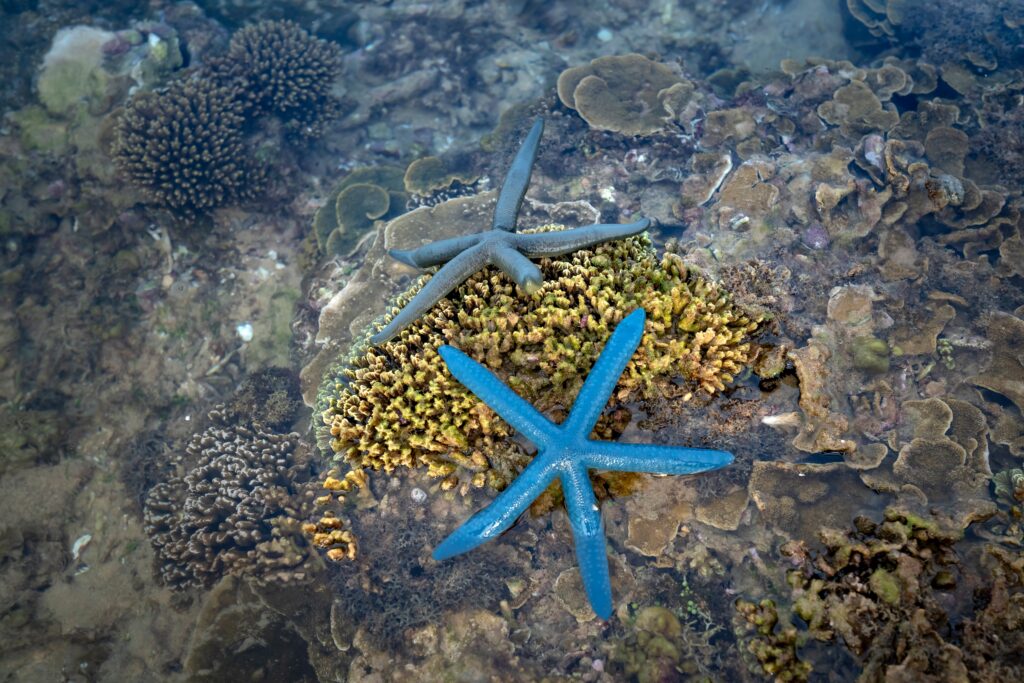
Here are the test images :
Train YOLO-NAS on Custom Dataset: A Step-by-Step Aquarium AI Guide 12 Train YOLO-NAS on Custom Dataset: A Step-by-Step Aquarium AI Guide 13 ### Import OpenCV for loading and resizing underwater test images. import cv2 ### Import SuperGradients models so we can reload the trained YOLO-NAS checkpoint. from super_gradients . training import models ### Import the YOLO-format dataloader builder for creating a test loader. from super_gradients . training . dataloaders . dataloaders import coco_detection_yolo_format_val ### Import the Trainer again to reuse its testing utility. from super_gradients . training import Trainer ### Import the detection loss class used during training so metrics stay compatible. from super_gradients . training . losses import PPYoloELoss ### Import the DetectionMetrics_050 class to evaluate mAP on the test set. from super_gradients . training . metrics import DetectionMetrics_050 ### Import the PPYoloEPostPredictionCallback for consistent post-processing. from super_gradients . training . models . detection_models . pp_yolo_e import PPYoloEPostPredictionCallback ### Import the multiprocessing module to keep Windows-safe entry points. import multiprocessing ### Define the main entry point for evaluation and prediction. def main (): ### Recreate the same dataset configuration dictionary used during training. dataset_params = { ' data_dir ' : ' C:/Data-sets/aquarium_pretrain ' , ' train_images_dir ' : ' train/images ' , ' train_labels_dir ' : ' train/labels ' , ' val_images_dir ' : ' valid/images ' , ' val_labels_dir ' : ' valid/labels ' , ' test_images_dir ' : ' test/images ' , ' test_labels_dir ' : ' test/labels ' , ' classes ' : [ ' fish ' , ' jellyfish ' , ' penguin ' , ' puffin ' , ' shark ' , ' starfish ' , ' stingray ' ] } ### Build the YOLO-format test dataloader for the aquarium test split. test_data = coco_detection_yolo_format_val ( dataset_params = { ' data_dir ' : dataset_params [ ' data_dir ' ], ' images_dir ' : dataset_params [ ' test_images_dir ' ], ' labels_dir ' : dataset_params [ ' test_labels_dir ' ], ' classes ' : dataset_params [ ' classes ' ] }, dataloader_params = { ' batch_size ' : 32 , ' num_workers ' : 2 } ) ### Define the same checkpoint root directory used during training. CHECKPOINT_DIR = " C:/Data-sets/aquarium_pretrain/checkpoints " ### Create a Trainer instance bound to the aquarium experiment checkpoints. trainer = Trainer ( experiment_name = " my_custom_yolo-nas " , ckpt_root_dir = CHECKPOINT_DIR ) ### Point to the best YOLO-NAS checkpoint that you want to evaluate and use for inference. best_weights = " C:/Data-sets/aquarium_pretrain/checkpoints/my_custom_yolo-nas/RUN_20240809_115703_065907/ckpt_best.pth " ### Load the trained YOLO-NAS small model from the best checkpoint. best_model = models . get ( ' yolo_nas_s ' , num_classes = len ( dataset_params [ ' classes ' ]), checkpoint_path = best_weights ) ### Evaluate the trained model on the full aquarium test set. result = trainer . test ( model = best_model , test_loader = test_data , test_metrics_list = DetectionMetrics_050 ( score_thres = 0.2 , top_k_predictions = 300 , num_cls = len ( dataset_params [ ' classes ' ]), normalize_targets =True , post_prediction_callback = PPYoloEPostPredictionCallback ( score_threshold = 0.01 , nms_top_k = 1000 , max_predictions = 300 , nms_threshold = 0.7 ) ) ) ### Print the evaluation metrics dictionary so you can inspect mAP and other scores. print ( result ) ### Define the path to a sample jellyfish image for single-image prediction. jellyfish = " Best-Object-Detection-models/Yolo-Nas/Yolo-Nas-Under-Water-Dataset/JellyFish.jpg " ### Define the path to a sample starfish image that you can also test later if you like. starfish = " Best-Object-Detection-models/Yolo-Nas/Yolo-Nas-Under-Water-Dataset/StarFish2.jpg " ### Read the jellyfish image from disk using OpenCV in BGR format. img = cv2 . imread ( jellyfish ) ### Convert the BGR image into RGB format expected by the YOLO-NAS model. img = cv2 . cvtColor ( img , cv2 . COLOR_BGR2RGB ) ### Set the percentage scaling factor for resizing the original image. scale_percent = 20 ### Compute the new width based on the scaling factor. width = int ( img . shape [ 1 ] * scale_percent / 100 ) ### Compute the new height based on the scaling factor. height = int ( img . shape [ 0 ] * scale_percent / 100 ) ### Create a tuple with the new width and height. dim = ( width , height ) ### Resize the image to the new dimensions to speed up inference. img = cv2 . resize ( img , dim , interpolation = cv2 . INTER_AREA ) ### Run YOLO-NAS prediction on the resized RGB image. predict_results = best_model . predict ( img ) ### Print the raw prediction object to the console for debugging. print ( predict_results ) ### Use the built-in visualization helper to show detections in a pop-up window. predict_results . show () ### Ensure the main() function runs only when this script is executed directly. if __name__ == " __main__ " : ### Activate freeze_support for safe multiprocessing on Windows. multiprocessing . freeze_support () ### Call the main() function to evaluate and run predictions with the trained model. main () With this block, your readers can both evaluate the trained YOLO-NAS model on the full test set and visually inspect predictions on individual underwater images.
Pro-Tip: If you notice the model is struggling with small fish or overlapping objects, try adjusting the fuse_model setting before inference. Fusing the layers combines the Batch Normalization and Convolutional layers into a single operation, which not only speeds up the detection on your GPU but can also provide more stable confidence scores in cluttered environments.
FAQ: Train YOLO-NAS on custom dataset in Python What does it mean to train YOLO-NAS on a custom aquarium dataset? It means you fine-tune YOLO-NAS on your own underwater images instead of generic benchmarks. The model learns to detect marine classes like fish, jellyfish, sharks, and starfish that appear in your aquarium photos.
Do I need a GPU to train YOLO-NAS on this dataset? A GPU is highly recommended because YOLO-NAS is a deep model and underwater datasets can be large. CPU training is possible but significantly slower, especially at higher image resolutions.
Which environment setup is used in this YOLO-NAS tutorial? This tutorial uses a Conda environment with Python 3.8, PyTorch 2.1.1, TorchVision 0.16.1, Torchaudio 2.1.1, CUDA 11.8, and the SuperGradients library. Keeping these versions aligned helps avoid dependency conflicts.
How should I organize my aquarium dataset for YOLO-NAS? Organize your data into train, valid, and test folders, each with images and labels subfolders. Labels should be in YOLO format with one line per object using normalized coordinates.
Can I change the aquarium classes to different underwater objects? Yes, update the classes list in the dataset configuration and make sure your label files use the same order. You can include any marine categories you need, such as coral, seahorses, or specific fish species.
What training hyperparameters are a good starting point? A batch size of 32 and around 100 epochs are solid defaults for many GPUs. You can reduce the batch size if you hit memory limits or adjust the number of epochs based on how quickly the loss and mAP curves stabilize.
What does mAP@0.50 tell me about my aquarium detector? mAP@0.50 measures how often your predicted boxes overlap the ground truth by at least 50% IoU. Higher mAP@0.50 means the model is locating underwater objects more accurately across the test set.
Why is freeze_support used in the YOLO-NAS code? On Windows, freeze_support is required when using multiprocessing with dataloader workers. It prevents issues with process spawning and keeps training and evaluation scripts stable.
How can I reuse this pipeline for a different custom dataset? Change the dataset paths and classes in the configuration dictionary and keep the YOLO folder structure. As long as the labels follow YOLO format, the same YOLO-NAS training and testing code will work.
Is this YOLO-NAS aquarium tutorial production-ready? The tutorial is designed as a clear, educational starting point. For production, you should add logging, error handling, monitoring, and model versioning around the core YOLO-NAS training and inference pipeline.
Conclusion Training YOLO-NAS on a custom aquarium dataset is a practical way to turn modern object detection theory into something visual and tangible.
In this post, you set up a dedicated Conda environment, installed a compatible PyTorch and CUDA stack, and brought in the super_gradients library.train yolo nas on custom dataset projects in the future.
You then evaluated the model on a test split and ran predictions on individual underwater images to verify performance.
The key takeaway is that once you understand how to structure your data, configure YOLO-NAS, and read the training metrics, you can reuse this template again and again.
Connect : ☕ Buy me a coffee — https://ko-fi.com/eranfeit
🖥️ Email : feitgemel@gmail.com
🌐 https://eranfeit.net
🤝 Fiverr : https://www.fiverr.com/s/mB3Pbb
Enjoy,
Eran
 Skip to content